




 Cart / €0.00
 By David P. Ellis
"I am not normal, not in a bad way, but I am different”.
By way of introduction, allow me to share my feelings about being gay, and the steps I took from a young age to navigate the path ahead of me. I knew I was different. That difference compelled me to develop the tools I needed, not to become normal, but to move through society with confidence, clarity, and strength.
Those tools allowed me to maintain my core values and be welcomed at the table of society where they welcomed me for my presence, my ability and talent and my counsel. I directed the focus away from my difference and onto what I could offer.
But my offering had to be packaged and wrapped in a way that was acceptable to the masses without compromise to self. I did not spend my time trying to make my difference acceptable, or indeed normal. Instead, I focused upon being the best version of myself in whatever role I chose.
Not just to be good. But to excel and be the best in my field.
Based upon my personal experience, I have prepared a guide for parents who want to raise a strong, whole, and self-directed man.
Most advice given to parents of gay children is well-intentioned — but incomplete. It focuses on acceptance, visibility, and affirmation, while quietly avoiding a harder truth.
World Design
The world has not been designed with gay men in mind. Social acceptance often appears more readily extended to gay women, whether this is influenced by cultural stereotypes, male fantasy, or the broader reality that women, as a group, tend to express empathy and emotional openness more freely.
Much of what passes for acceptance today feels conditional rather than genuine. The modern world can seem deceptive, filled with mixed signals and surface-level progress, where inclusion is offered only so long as it remains comfortable or convenient.
True acceptance, however, requires honesty, consistency, and respect—qualities that still feel unevenly applied.
This article is not written from a place of fear, nor from resentment.
It is written from experience — from the perspective of a gay man who is happy, successful, fulfilled, and realistic. However, I do need to clarify here, I was born and raised in Ireland in the 60s and 70s, my experience is grounded in that culture, norms and society. Some cultures differ, but I can only offer experience-based advice, based upon the cultural norms of Ireland and similar European countries.
Its purpose is not to make a gay boy “normal”. It is to help him become prepared.
Changing World Views – Maybe Not

The world view is changing, I hear you say. Davinci and Oscar Wilde, Michelangelo, Plato and Walt Whitman, to name but a few believed, that given time, acceptance would prevail.
What unites these men was not naïve optimism — it’s something deeper:
They believed difference was not defect
They believed nature does not make mistakes
Ad they believed history, not society, is the true judge
They did not believe everyone would accept them immediately. However, they believed acceptance would come after courage, suffering, and time. Alas, it has not.
They did not believe being gay was normal in the sense of common, but they believed it was natural, valid, and necessary.
“Not normal. But not wrong”. Difference is real and pretending otherwise does harm
A gay boy is not broken, deficient, or incomplete. But he is different in ways that matter socially, psychologically, and structurally. “Normal” simply means assumed by default. Most systems, families, schools, religions, workplaces, are built around heterosexual assumptions.
That difference creates friction. Ignoring that friction does not protect a child. But preparing him for it does.
Safe Home
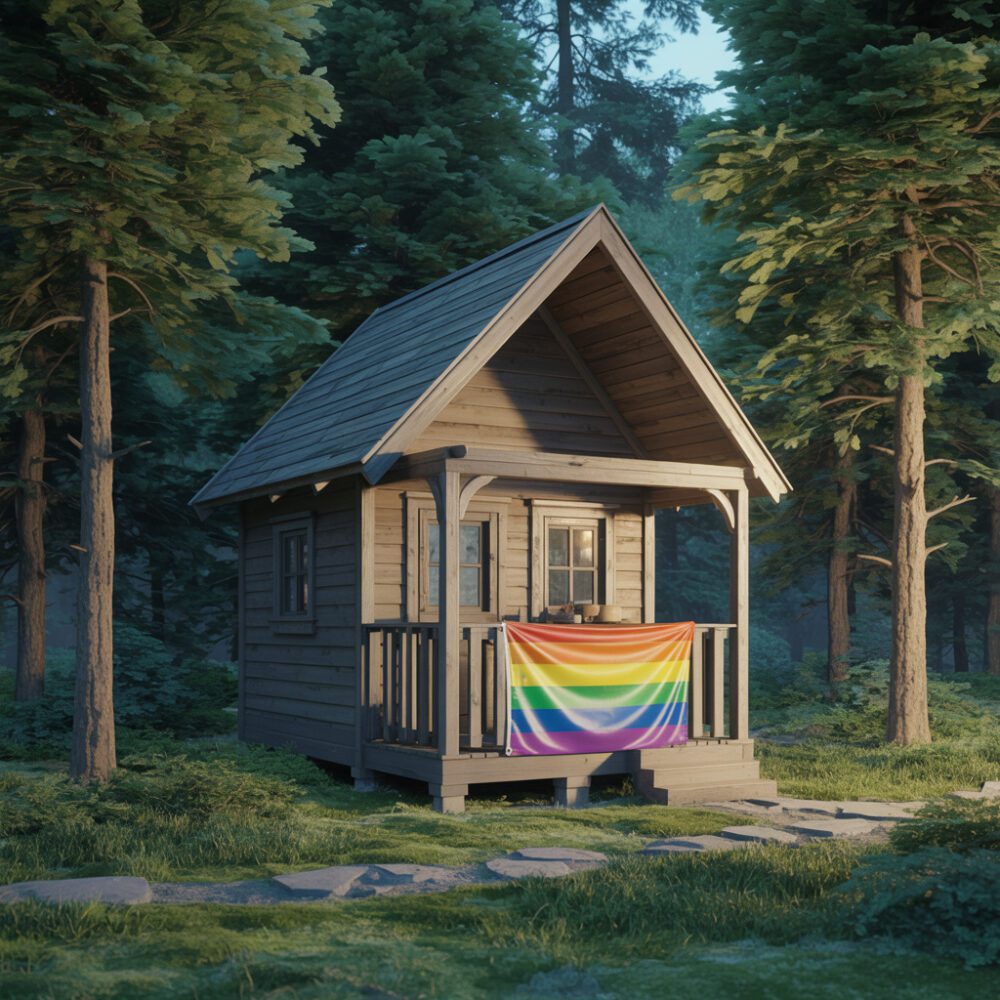
Home must be the place where he never performs, he can be himself, the most important thing a parent can offer is one environment without conditions. Of course there are rules, but we are explicitly referring to his sexuality.
At home, a gay boy must know that he is loved without exception, he is not a problem to be fixed, explained, or be ashamed of. His difference does not disappoint or burden his parents, and he does not need to educate, justify, or defend himself in terms of his sexuality. Home is where the mask comes off — because the world will often require one.
Without this foundation, a child learns to fragment into several protective personas, instead of just one. When fragmented and split, one or more can become dominant. Bringing with it a personality type that is not that of the child.
These fragmented personas often organise themselves around three core drivers: Safety, Survival, and Acceptance.
From the perspective of Safety, the individual becomes hyper-vigilant. They learn to duck and dive, to avoid conflict, to hide, to retreat, and to seek refuge wherever it can be found. Life becomes something to navigate rather than experience. While this may offer short-term protection, it ultimately restricts growth, curiosity, and the capacity to live fully.
Then there is the persona shaped by Survival. Even the word itself feels heavy. To survive life, rather than to live it, is an exhausting state of being. Here, existence becomes transactional—endure today to reach tomorrow. Joy, creativity, and meaning are postponed indefinitely, sacrificed in service of simply getting through.
Finally, there is the persona driven by Acceptance. In this state, the individual bends, edits, and conceals themselves in order to belong. Authenticity is slowly replaced by performance. Over time, the person becomes unrecognisable even to themselves, having learned that being accepted is conditional upon being someone else.
The cost of these fragmented identities is profound. The individual fractures internally, relationships become strained or inauthentic, and the collective suffers as people show up not as who they are, but as who they believe they must be.
Lasting wholeness begins when safety no longer requires hiding, survival no longer eclipses living, and acceptance is no longer purchased at the cost of the self.
Fragmentation is exhausting and unnecessary — if home is secure. The goal is to form one protective persona, not a mask, not a pretence or a lie, but a simple vehicle that allows us transverse humanity casting the attention off the difference and onto something more powerful. The authentic self.
Acceptance and safety are not the same thing
Many parents want to believe the world has “moved on”. It hasn’t, it has learned new manners. We are not allowed to say “faggot, queer, nancy, fairy, pansy, poof” and the list goes on and has become more vulgar. Just because we are no longer allowed say these words, does not mean that people do not think them when they see a gay boy or man.
Today, hostility is often hidden behind, polite smiles, passive distance, jokes framed as humour, and silence instead of open rejection. It is hurtful when one realises the truth. Speaking of truth, for me personally, I have always been more accepting of people who tell me truthfully that they have a problem with my difference, rather than the pretence of liking me and accepting me.
A gay boy must be taught this gently but clearly, and its hurtful to realise that not everyone is accepting of who we are. The important lesson is this:
Not everyone who smiles is safe
Not every space deserves your truth
You do not owe visibility to anyone
Disclosure is a choice, not a duty
This is not teaching fear. It is teaching situational awareness. Straight children are rarely taught this because they do not need to be. Gay children do.
Many gay men develop what looks like a “persona” early in life. This is often misunderstood as, inauthenticity, over-performance or emotional distance, but in reality, it is adaptive intelligence.
It is important for a gay boy to quickly learn, how power operates, how discomfort hides behind politeness, how competence reduces threat and how excellence creates autonomy. This is not shame. It is strategy. The goal is to ensure the complexity of the vehicle is stable, strong, flexible and agile, but does not replace the core self.
Teach agency, not apology
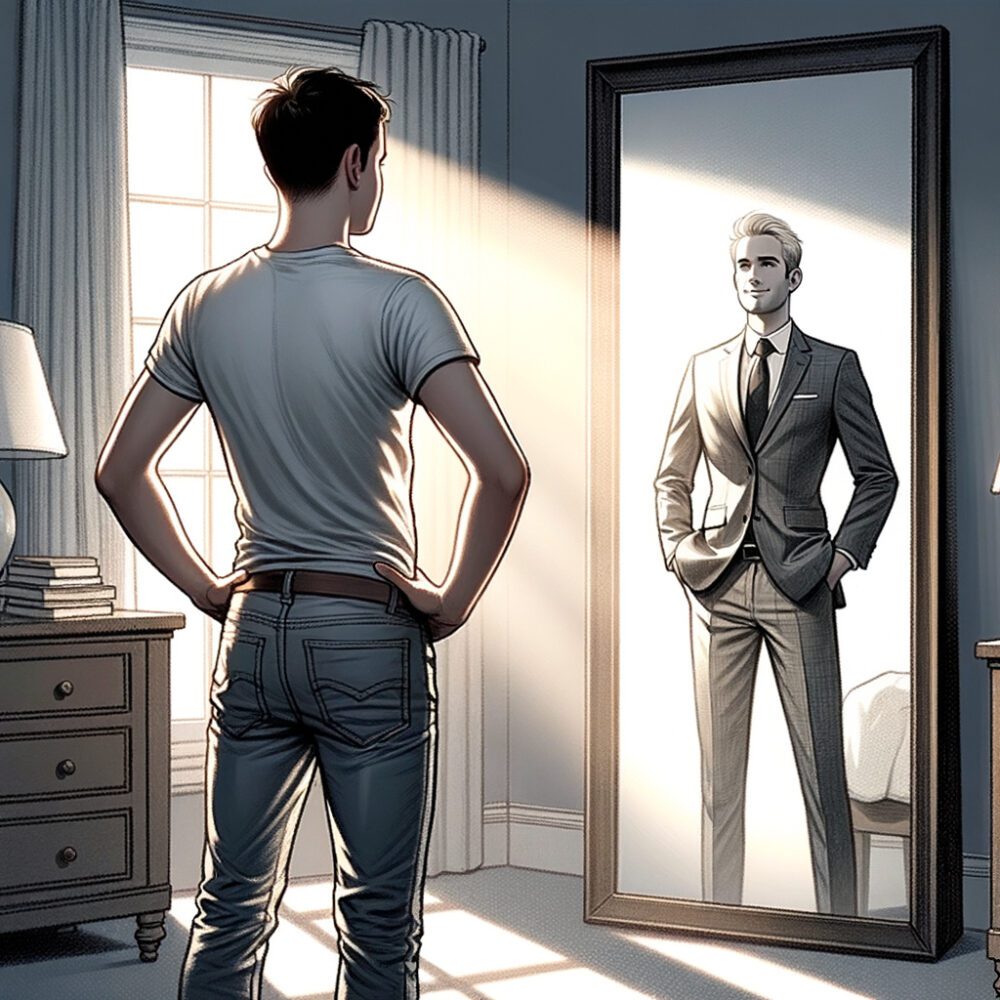
A parent’s job is not to make a gay son palatable to others, It is to make him self-directed, which in essence means, teaching him excellence is a form of protection, financial independence equals freedom, emotional regulation is power, you can be kind without being exposed, you can be authentic without being reckless, and you do not need to be understood to be valid. Above all, he must learn “Your worth is not decided by other people’s comfort”, but in saying that, there is no need to go out of your way to make people feel uncomfortable.
A sentence every gay boy deserves to hear
There is one truth that reframes everything - “You are not abnormal. You are a minority variant in a world designed for the majority. That means you will need skills others never have to learn.”
This transforms difference into information, adaptation into mastery and success into something earned, not borrowed. It also removes the silent pressure to apologise for existing.
Joy is not naïve — it is earned
Gay men build lives of deep joy, creativity, connection, and meaning, often because they were required to know themselves early. But joy lasts only when it is built on truth. Preparation does not diminish pride. It makes pride durable.
Final words to parents
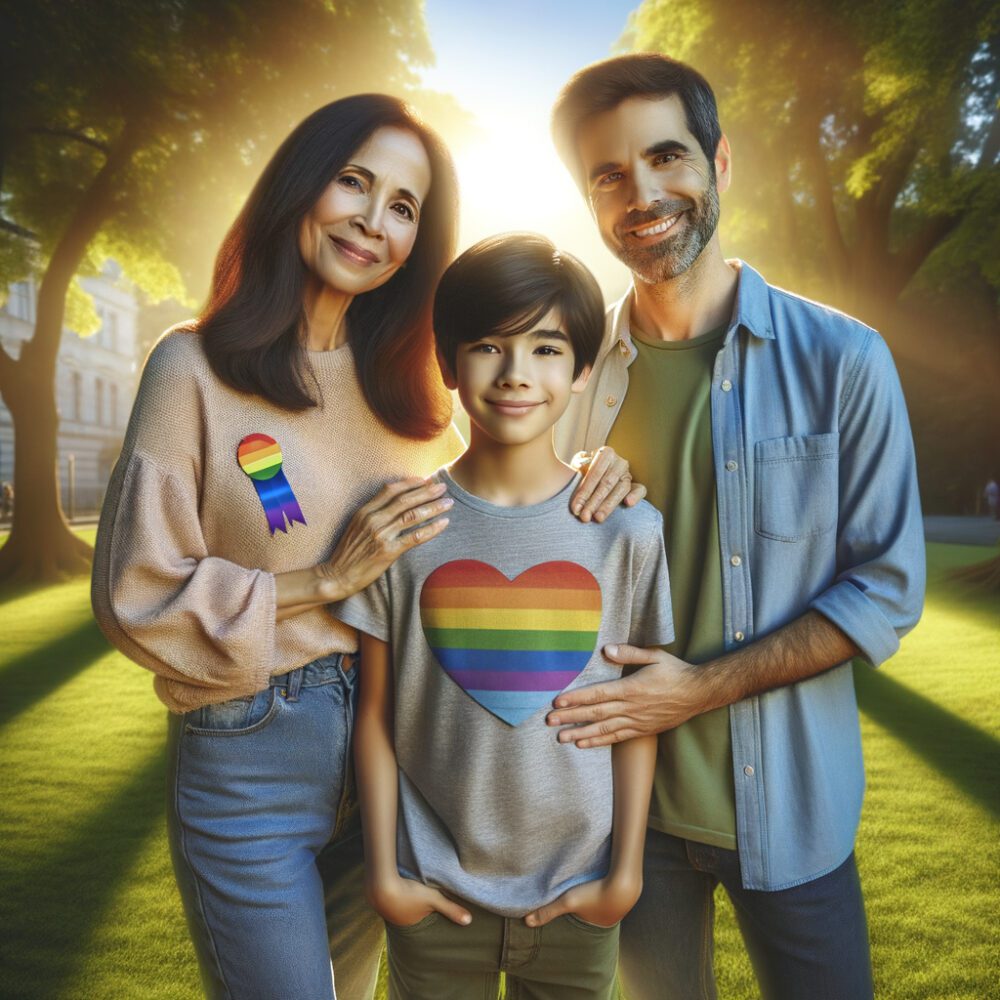
You do not need to harden your child and please don’t. You do however need to equip him. Love him without condition. Tell him the truth without cruelty. Teach him to choose his battles and show him how to stand upright in a world that may not always make room. Do this, and you will not raise a fearful boy, but raise a man who moves through the world with clarity, dignity, and agency.